
Learning basic BJJ moves for new students is the best way to start your journey in Brazilian Jiu-Jitsu. As a white belt, understanding fundamental techniques and proper etiquette will help you succeed in your first classes.
Brazilian Jiu-Jitsu, often called BJJ, may seem complex at first. However, new students can progress quickly by focusing on a set of fundamental moves and survival strategies. In this guide, you will find tips for the mats, practical examples, and detailed explanations created for beginners. Saiba mais sobre BJJ Fundamentals Every Beginner.
Introduction to BJJ for White Belts and Beginners
For anyone just starting out, Brazilian Jiu-Jitsu can be both exciting and overwhelming. New students often experience confusion around what happens during class, what is expected of them, and how to survive their first rolling (sparring) rounds. Because of this, it is important to start with a clear understanding of the art’s foundation.
In BJJ, the goal is to control and submit an opponent through grappling, without striking. Unlike some martial arts, BJJ allows a smaller person to control or submit a larger opponent using leverage, technique, and timing. Therefore, learning key positional concepts and basic submissions helps new students build confidence and reduce frustration. In addition, understanding etiquette and survival strategies keeps you safe while you learn. Veja tambem: Beginner BJJ Drills for Improvement: Essential Drills to Level Up.
According to leading instructors, such as those from the Gracie University, most beginners spend their early months focusing on positions instead of advanced submissions. In fact, learning escapes and control positions—rather than only attacking—creates a solid foundation. Veja tambem: First BJJ Class Tips for Beginners: Your Easy White Belt Guide.
The sections below cover essential basic moves, the logic behind each technique, and practical tips for white belts. The aim is to help you navigate your first classes and feel ready for rolling. Veja tambem: BJJ Etiquette for White Belts: Essential Do’s and Don’ts for New Students.
Basic BJJ Moves for New Students: Foundational Positions
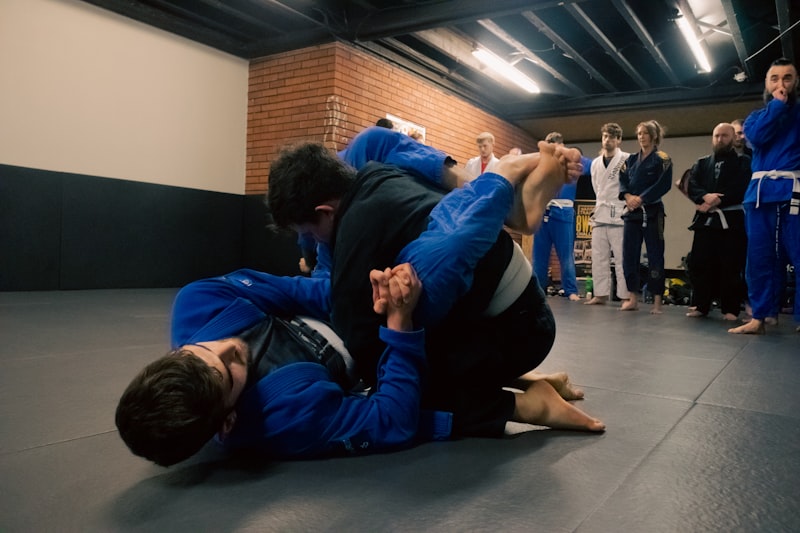
Mastering the foundational positions is the first step toward progress in BJJ. The most common positions for beginners include closed guard, side control, mount, and back control. Each position offers unique opportunities and risks.
First, the closed guard is where one student lies on their back and wraps their legs around the opponent’s waist. For new students, playing closed guard helps control distance and frustrate opponents. Key advice from black belt instructors is to keep your legs locked and use your arms to manage your opponent’s posture.
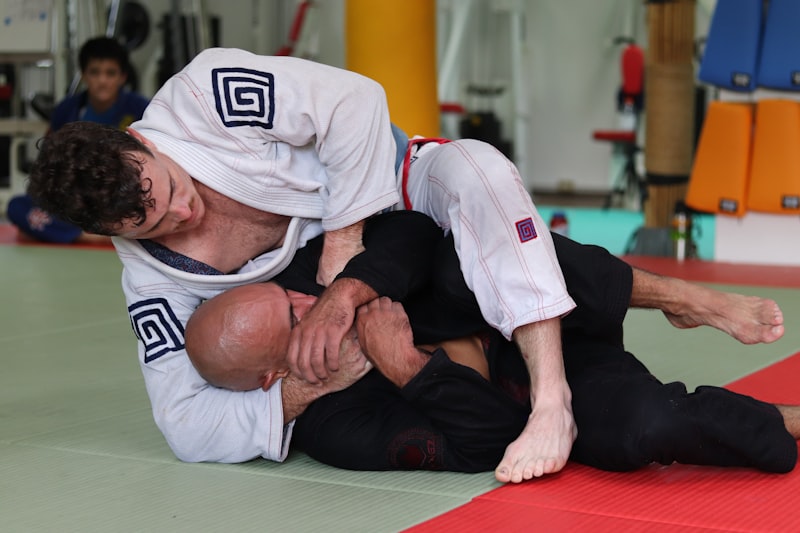
Second, side control is a dominant position where you lie across your partner’s upper body and pin them to the mat. This position allows you to control your opponent’s hips, limit their movement, and set up submissions or transitions. However, new students should focus on keeping their weight centered and staying low, making it difficult for the opponent to escape.
Third, the mount position means sitting on top of your opponent’s torso, facing their head. Because this position offers great control and striking potential (in self-defense or MMA), it is considered one of the most powerful spots in BJJ. As a beginner, learn to keep your knees tight, base low, and maintain heavy pressure.
Finally, back control is when you are behind your opponent, usually with your legs wrapped (hooks) around their waist. This position is highly valued for its control and submission options. As a new student, focus on securing the seatbelt grip (one arm over the shoulder, one under the arm), keeping chest-to-back contact, and staying tight.
In fact, according to a study in the Journal of Human Kinetics, high-level BJJ matches are often decided by positional control, especially mount and back control. Therefore, beginners must learn to recognize, achieve, and maintain these positions before worrying about flashy submissions.
Positional Transitions: Moving Safely Between Positions
Many white belts struggle with moving smoothly between positions. For example, getting from closed guard to mount—or from side control to back control—requires balance, timing, and attention to the opponent’s reactions.
To transition safely, use your hips and avoid leaving space for your opponent to escape. Beginners are taught to “connect their elbows and knees” to stay tight, and to move with small, controlled steps instead of big, wild actions. Over time, these habits lead to smoother transitions and better defense.
Essential Escapes: Surviving and Recovering as a White Belt
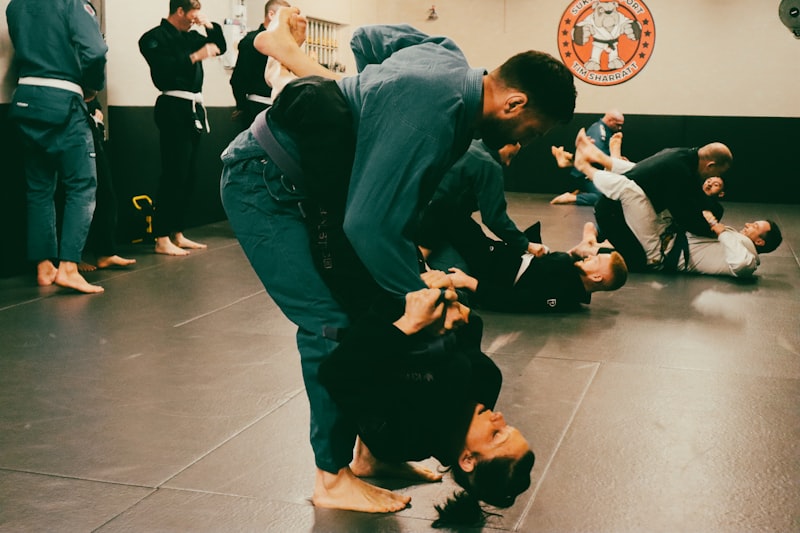
Beginners often find themselves in bad spots, like being pinned in side control or stuck in mount. Because of this, learning to escape these positions is one of the first survival skills every new BJJ student must master.
First, the bridge and roll escape (upa) from mount is a basic move every white belt needs. When your opponent sits on top of you, trap their arm and foot on one side, then bridge your hips up and roll over your shoulder. This action helps you reverse the position or escape from the bottom.
Second, the elbow escape (shrimp escape) is another must-know BJJ move. If you are trapped under mount or side control, turn to your side, use your arms to frame your opponent’s hips, and push your hips away while sliding a knee between you and your opponent. This move allows you to recover guard or create space to escape.
Third, the frame and hip escape from side control involves placing your forearm across your opponent’s neck or hip, anchoring your foot on the mat, and pushing your hips away to create space and recover your guard. This escape is used in almost every class because side control is so common.
According to coaches, white belts who practice escapes every class improve their survival dramatically within the first months. In addition, grapplers who “learn to survive first, attack second” are less likely to become discouraged or injured.
For example, a beginner might drill the bridge and shrimp escapes for ten minutes before live rolling. As a result, they get better at avoiding pins and feel more confident when rolling with higher belts.
Basic Submissions for Beginners: Learning to Attack Safely
Many new students want to learn submissions as soon as possible. However, instructors always stress the importance of first understanding the details and safety of these attacks. For beginners, focus on a few fundamental submissions that are simple, safe, and effective.
The rear naked choke is often the first submission taught to new students. To apply it, first secure back control. Then, slide one arm under your opponent’s chin. Grab your own biceps with the other hand, and lock your second hand behind your opponent’s head. Squeeze slowly and wait for the tap. It is critical to use pressure, not strength, and release immediately once your partner taps.
The cross-collar choke from guard uses both hands to grip deep into the opponent’s collar (in gi training). Pull your elbows down while crossing your wrists. This choke can be set up from closed guard or mount. For new students, practicing the correct grips and gradual squeezing is more important than rushing the attack.
The armbar from guard is another classic beginner submission. You start in closed guard, control your opponent’s wrist and arm, pivot your hips, and swing your leg over their head. Then you pinch your knees together and extend your hips slowly. Beginners should always apply submissions slowly, with control.
Finally, the Americana or “keylock” from mount or side control can be a beginner-friendly submission. Use the “paintbrush” motion to apply pressure to your opponent’s shoulder. However, always listen and stop if your partner taps.
Studies show that simple submissions, like chokes and armlocks, have the highest success rates in competition. For new students, developing strong basics and safety habits prepares you for more advanced moves in the future.
Etiquette, Drills, and Survival Tips for the First Months
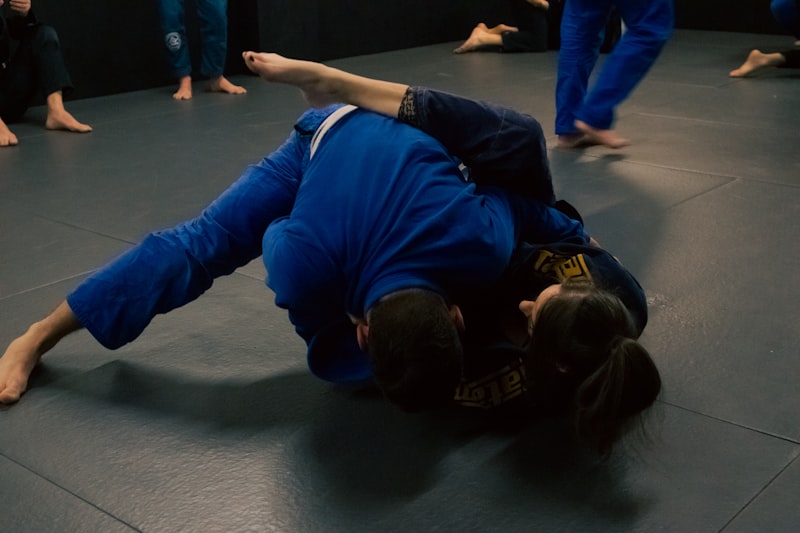
Understanding basic etiquette and training habits is just as important as learning techniques in your first classes. The right habits keep you safe, help you make friends, and speed up your learning.
First, arrive a few minutes early to class, bow or greet your instructor on the mat, and wear a clean uniform (gi or no-gi attire). Respect your training partners by keeping nails short and practicing good hygiene. In addition, always tap early and clearly if caught in a submission—never risk injury.
Second, drilling is a key method for improving skills quickly. In each class, you may drill escapes, guard retention, or basic sweeps for several minutes at a time. Repetition creates muscle memory. According to most schools, drilling a move 50–100 times per week leads to noticeable improvement in a month.
Third, when you start rolling (live sparring), focus on survival, not winning. Higher belts may help you, but your main goal is to defend, stay calm, and practice the basic BJJ moves you have learned. Accept being tapped often; it is part of the learning process. After rolling, thank your partner—BJJ is a team effort.
For example, if you spend your first six months drilling shrimps, bridges, and positional escapes, you will notice a dramatic improvement in defense and confidence. White belts who “survive and defend” in their first year are much more successful as blue belts later.
Finally, do not be afraid to ask questions. Most instructors and upper belts enjoy helping. Watching online videos or attending seminars by top instructors can also support your progress.
Common Mistakes and How to Avoid Them as a BJJ Beginner
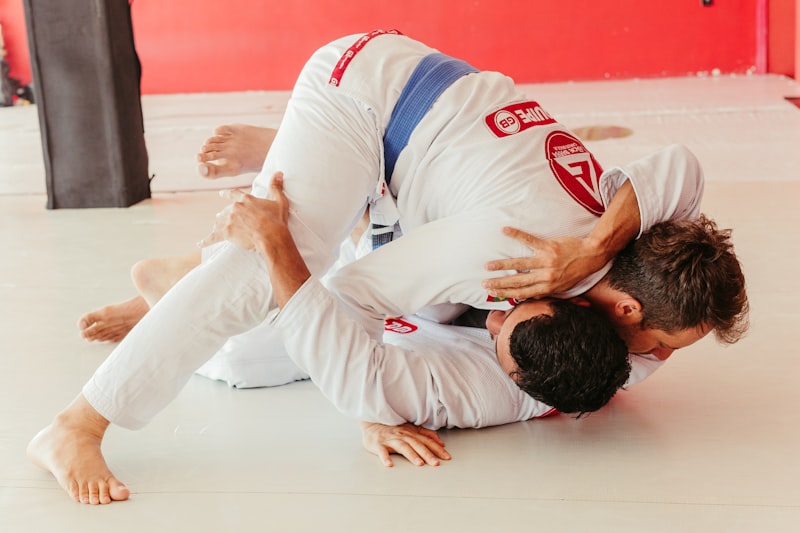
Many white belts make the same mistakes when first starting BJJ. Recognizing them early helps you avoid bad habits and prevent injuries.
One common mistake is using only strength instead of technique. Beginners often try to muscle their way out of positions, which tires them out quickly. Instead, focus on the details your instructor teaches, and use leverage and proper angles.
Another frequent error is forgetting to breathe. Holding your breath makes you tense and slows your reaction time. Remind yourself to relax and breathe during drills and rolling.
Beginners sometimes ignore important concepts, such as “frames” (using your arms and legs to create space) and “connections” (keeping elbows close to your body). These details help prevent submissions and escapes by your opponent.
In addition, some new students roll too hard or resist tapping due to pride. This can lead to injuries and slow your learning. Tap early, roll safely, and remember that every match in the gym is a chance to improve.
Finally, skipping warm-ups or stretching can lead to muscle strains. Take a few extra minutes before and after class for mobility drills or light stretching. This habit builds a healthier body for BJJ.
If you are unsure about a position or move, ask your instructor to review it with you. Many coaches are happy to give feedback when they see students making honest efforts to learn. In other words, showing respect and asking questions speeds up your growth.
Conclusion
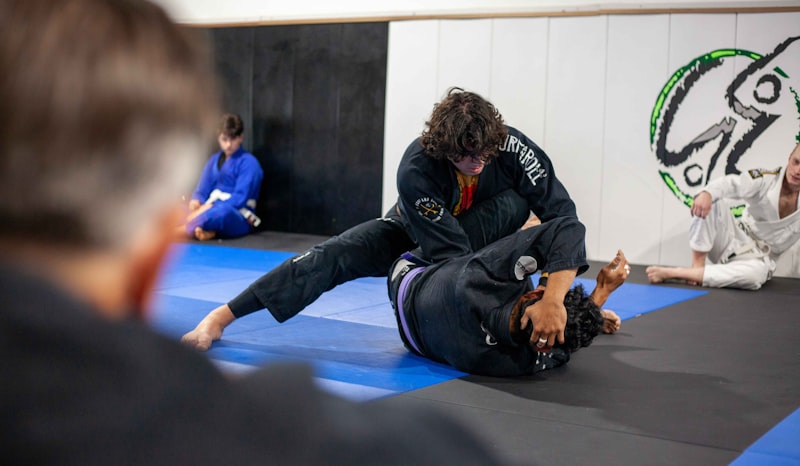
In summary, mastering basic BJJ moves for new students is the best way to build a solid and safe foundation in your first year. Learning the main positions, escapes, and submissions builds confidence and skill. Practicing good etiquette, focusing on drilling, and avoiding common mistakes create a positive learning environment.
Start each class with an open mind, ask questions, and practice the essential techniques until they feel natural. Remember: progression in BJJ takes time, but the basics will carry you through every stage. If you need extra guidance, reputable sources like BJJ Fanatics provide helpful videos and insights for white belts.
Your goal is not to win every roll but to learn and grow every session. Keep training, stay patient, and enjoy the journey. See you on the mats!