
To improve your skill in open guard system attacks and sweeps, you need the right strategies and techniques. This approach is central to developing a flexible defense and a dangerous offense in Brazilian Jiu-Jitsu.
Learning to attack and sweep from open guard shapes how you control your opponent. It helps you keep them off balance and creates real chances to gain points or submit. Let’s see how open guard structures work, which attacks and sweeps rank best in 2026, and how to mix them for strong results. Saiba mais sobre How to Counter Guard.
Understanding Open Guard: Key Structures and Principles

Open guard means keeping your legs unlocked, ready to control or attack from many angles. Unlike closed guard, you don’t lock your legs around your opponent’s body. Instead, you use hooks, frames, and grips to manage distance and stay safe. Therefore, open guard gives you more movement. However, it also involves greater risk because your opponent has more room to move.
The main open guard variations are De La Riva, Spider, Lasso, X-guard, and Butterfly guard. For example, the De La Riva guard uses one leg hooked around your opponent’s outside leg, keeping your foot on their hip or thigh. This setup controls their posture and base, making it hard for them to pass. Veja tambem: Defending Against Common Guard Sweeps: BJJ Strategies for 2026.
Another key version is the Lasso guard. You loop your leg around your opponent’s arm and grip their sleeve, therefore locking down their movement. This helps you start attacks or sweeps, especially against bigger opponents.
Spider guard is popular in gi competition. It involves keeping your feet on your opponent’s biceps, while you grip their sleeves. First, this gives you strong pushing power. Second, it allows many sweep and submission options. X-guard and Butterfly guard focus on using your shins and feet to keep your opponent off balance while opening chances to sweep.
Because of the loose nature of open guard, quick grips and strong frames are vital. In addition, movements like hip escapes and technical stand-ups are important. These let you recover or attack at any moment. You must always watch your opponent’s balance, hand position, and posture. In fact, small mistakes can lead to a pass or the loss of guard. Saiba mais sobre What Is a Guard.
For a deeper dive into guard theory and fundamentals, see the BJJ Fanatics Guide to Open Guard.
Core Attacks from the Open Guard System

Attacking from open guard does not just mean sweeping. Many of today’s top BJJ athletes attack with submissions and sweeps in quick succession. In 2026, the most common attacks include triangles, omoplatas, armbars, and back takes.
The triangle choke is a key attack that works across almost every open guard type. You trap your opponent’s head and arm between your thighs, cutting off blood flow. For example, in Spider guard, if you pull your opponent’s arm across your body while keeping their posture down, you can shoot your leg over for the triangle. This attack works well because it combines threat with control.
Similarly, omoplata is a shoulder lock that starts from a failed triangle or regular Spider guard grip. You thread your leg over the opponent’s arm and then pivot your hips. As a result, you use your legs to finish the lock. In addition, the omoplata can help set up sweeps if your opponent tries to roll through the attack.
Armbar attacks come often from both Lasso and De La Riva guards. As your opponent tries to break grips or stand, you can swing your hips and catch their arm. For example, if they lean forward in Lasso guard, an armbar becomes easy to find.
Back takes remain a serious threat from open guard. Many modern BJJ strategies blend leg entanglements and sweeps that end with an opponent exposing their back. The single leg X-guard is popular for this. You lift your opponent’s leg and, if they try to escape, you climb to their back for the finish.
These attacks work best when you combine them with off-balancing and grips that keep your opponent busy. Successful open guard players chain attacks so that if a sweep fails, an armbar or triangle is already starting. Therefore, always look for ways to connect moves instead of focusing on one attack.
Essential Open Guard Sweeps: Off-Balancing and Transitions
Sweeps allow you to move from bottom to top, scoring points and gaining dominant positions. Understanding how to set up sweeps from open guard is crucial to success in every level of BJJ.
First, the key task is off-balancing, also known as ‘kuzushi.’ This means shifting your opponent’s weight so they cannot recover their base. For example, in De La Riva guard, you pull your opponent’s sleeve while pushing their knee with your foot. As a result, their weight tips forward, and you can sweep.
The tripod sweep is often taught first and still works well, even at advanced levels. It starts in De La Riva or basic open guard grips. You put one foot on their hip and the other behind their ankle. With grips on their sleeves or pants, a push-pull movement often knocks your opponent backwards. In addition, this sweep makes your opponent use their hands on the mat, opening up arm attacks.
Another high-percentage option is the sickle sweep. This works when your opponent steps back from tripod sweep. Here, you switch your foot from the hip to the back of their heel. Pull as you sweep their foot out; they fall backward or sideways. Both sweeps are simple but still appear in top BJJ matches in 2026 for a reason: they break base reliably.
Butterfly guard sweeps use hooks with your feet inside your opponent’s legs. First, you elevate your hips under your opponent. Then, with grips on their wrist or belt, a strong lift and turn can flip them over. Because of this, butterfly sweep is popular with both light and heavy athletes. It requires timing rather than strength. Saiba mais sobre Common Mistakes in Guard.
X-Guard and single leg X-guard offer more complex sweeps. You weave your legs under your opponent, lifting one leg while controlling their far ankle. Many world champions use this to knock opponents off balance and stand for an easy pass or back take.
However, it’s vital to transition smoothly if your initial sweep fails. Always aim to move to submissions or recover your guard. This prevents your opponent from capitalizing on your failed sweeps.
Moving from sweep to submission keeps you unpredictable. In fact, data from Jiu-Jitsu Times notes that combination attacks increase sweep success by over 20% at the competition level.
Combining Attacks and Sweeps for a Strong Open Guard Game
Effective open guard work demands you mix attacks and sweeps. Athletes who only sweep or only attack with submissions can become predictable. The real strength lies in using attacks to set up sweeps and vice versa.
For example, imagine playing Spider guard. If you attack a triangle choke, your opponent may posture up hard to escape. As a result, their base becomes unstable. Shift your grips and attack the tripod sweep while they are off balance. Therefore, even if the choke does not work, you may end on top, scoring points.
On the other hand, mixing omoplatas with sweeps like the De La Riva hook forces your opponent to divide their attention. If they focus too much on defending a sweep, the omoplata opens up. However, if they push back into you, the sweep is right there. This keeps your offense flowing, so you are always on the attack.
High-level athletes use grip fighting to control these exchanges. Grips on sleeves, pants, or ankles let you change direction fast. For example, championship matches in 2025 and early 2026 show repeated patterns: a failed sweep quickly becomes a back take, armbar, or a different sweep. This is why drilling combinations is crucial.
Off-balancing with kuzushi at the right moment is a must. For example, if your opponent stands to pass, off-balancing them sideways opens X-guard entries. From here, sweeps or leg attacks can follow. As a result, your opponent must work just to stay upright, not even considering passing.
To build your own system, start with two or three sweeps that work for your body type. Add matching submissions that branch off those sweeps. Drill transitions between similar moves. Finally, train with sparring partners who can defend well, forcing you to mix attacks on the fly. In summary, this chained approach builds an “attack tree.”
Defensive Concepts: Protecting Against Passes and Recovering Guard
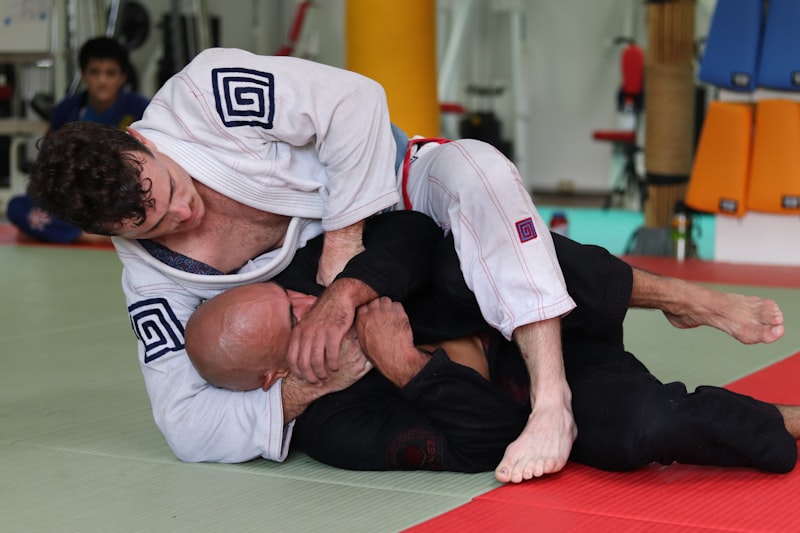
An open guard is strong only if you can stop passes and recover quickly. Therefore, solid defense must be part of your open guard system.
First, posture is key. Keep your knees up and elbows tight. This prevents easy leg drags or over-under passes. In addition, grips on the opponent’s sleeves or ankles keep them from settling in for a pass.
If your opponent breaks your grips, immediately look to re-establish connections or switch to another guard. For example, if you lose Spider guard, moving to De La Riva or even technical stand-up helps you reset. This constant movement makes guard passing much harder.
Frames—using your shins and arms to block forward pressure—are critical. Many champions in 2026 focus on strong framing to stop fast torreando (bullfighter) passes. For example, when an opponent tries to sprint around your legs, a stiff arm frame against their shoulder slows them down. Because of this, you gain the time needed to re-guard or attack.
Another key is hip movement. Shrimping and hip escapes let you keep space while recovering guard. In addition, well-timed hip bumps can lead directly to sweeps if your opponent gets out of position.
Many beginners neglect the importance of defense, but it is just as important as attacks. Statistics from competition matches in the past year show that athletes with a 70%+ guard retention rate reach the top positions in tournaments more often.
Finally, always keep your head off the mat and your arms safe. This prevents both guard passes and submission threats from your opponent.
Conclusion

Mastering open guard system attacks and sweeps builds a foundation for dynamic, modern BJJ. By learning the main guard structures, practicing high-percentage sweeps, and combining them with linked submissions, you build a game that constantly threatens your opponent. In addition, strong defense and grip management keep you safe while you attack.
Start with two or three favorite sweeps and a handful of submissions. Drill them until you can mix and match with ease. Therefore, you will grow into a player who can control the pace from the bottom and turn the tables on any guard passer. For more technical guides or detailed video breakdowns, continue exploring ismartfeed.com’s section on guard systems.