
Every beginner should understand the must know escapes for white belt BJJ. In your first months on the mat, learning how to get out of tight spots is more important than flashy moves. Escaping well keeps you safe, builds confidence, and helps you enjoy classes.
Many white belts feel stuck when training with more experienced partners. Therefore, knowing the right ways to escape common pins can make each class less stressful. In this article, you’ll find essential escapes, practical advice, and tips to survive your first rolling sessions as a white belt in Brazilian Jiu-Jitsu.
We also focus on the etiquette and mindset needed for a positive start in BJJ. Our guide is designed for brand new students and covers real situations you will see on the mats.
Why Escapes Matter Most for White Belts
Must know escapes for white belt BJJ are the building blocks of a strong foundation. Many new students want to learn submissions first. However, defense is more important early on. Escapes teach you to stay calm under pressure and avoid frustration during rolling. Veja tambem: White Belt BJJ Competition Tips: A Smart Beginner’s Survival Guide.
In your first classes, you will likely end up stuck under more experienced training partners. Knowing how to escape helps you feel in control even when pinned. For example, studies show that new grapplers spend up to 65% of early sparring rounds in inferior positions like side control or mount (BJJ Fanatics). That means escapes matter much more than attacks.
The psychological benefit is another key factor. As a result, escaping helps you stay positive instead of discouraged. In fact, survival is often your main goal as a beginner. When you consistently escape, you avoid the frustration that makes many quit early.
There’s also the matter of safety. Escaping positions like side control or the mount helps prevent submissions and injuries. In addition, it builds the habits you need to defend yourself both in training and, potentially, in real-life situations.
Learning escapes first helps you develop good defensive posture and timing. Therefore, you spend less energy fighting for your life and more time learning from each roll. In summary, focusing on escapes during your early months creates the foundation you need for long-term progress.
The Four Must-Know White Belt BJJ Escapes
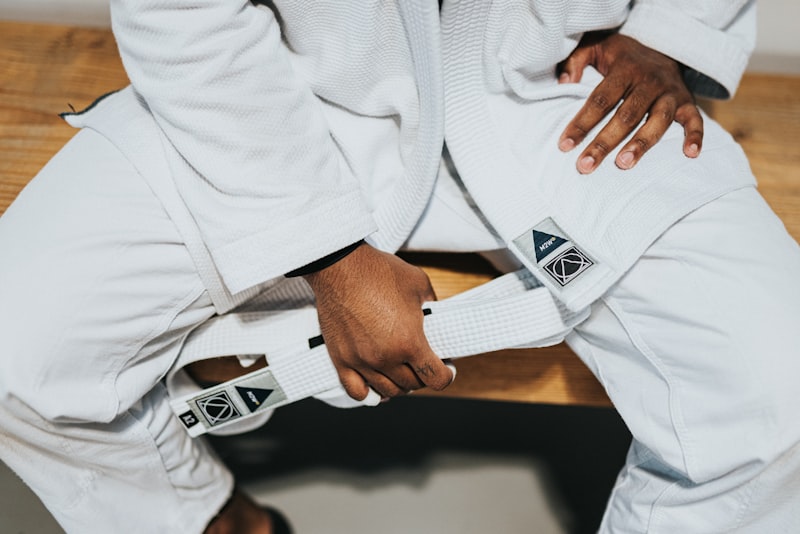
White belts need reliable escapes for the four most common pins. These are side control, mount, back control, and closed guard bottom. Let’s look at each in detail, with practical tips and steps.
Side Control — Basic Bridge and Shrimp
Side control is the position where your opponent lies across your torso. Most beginners get stuck here often. The most dependable escape is the bridge and shrimp. First, frame your arms against their hips and shoulder to make space. Then, bridge your hips upward to move their weight. Finally, use a “shrimp” or hip escape motion to slide your hips away and recover your guard or get to your knees.
For example, if your opponent is holding tight, stay patient and focus on small spaces. Avoid pushing with your arms; use your legs and hips. In addition, always keep your elbows close to your body, so they can’t isolate your arms.
Mount — Upa (Bridge) and Elbow Escape
When someone is sitting on your torso (the mount), use two classic escapes. The first is the upa or “bridge and roll.” Trap their arm and foot on the same side. Bridge forcefully over your shoulder to roll them off. However, if they base out, switch to the elbow escape. Frame on their knee, turn to your side, and slide your knee under their leg. As a result, you can recover half guard or closed guard.
It’s normal for the mount escapes to take time. Therefore, drill both moves often and learn how to connect them. In summary, patience and good timing are key.
Back Control — Hand Fighting and Hip Escape
Back control is when your opponent is behind you, usually with hooks in and attacking your neck. This can feel scary. First, stop the choke by fighting hands — always grab the wrist that is coming around your neck.
Once you manage the choke hand, scoot your hips down and move them to the mat. This is called “escaping the hips.” Lie on the side of the choking arm, tuck your chin, and slide your back to the mat, facing your opponent. In fact, high-level athletes use these basic hand-fighting and hip-escape steps at every belt level (Gracie Barra).
Don’t rush the escape; one step at a time is safer. For example, it is better to give up mount than to be choked from the back.
Closed Guard Bottom — Posture and Technical Stand-Up
Though not a pin, closed guard bottom can be tricky. If your partner is aggressive from the top, you must learn to protect yourself. First, don’t let them break your posture. Keep your back straight and hands on their body or belt. If they open their guard, use the “technical stand-up” to get to your feet safely.
In addition, never lean too far forward, or you risk being swept or submitted. Practice standing up with one hand on the mat and kicking your leg back to safety. Because of this technique, you can avoid fast guard passes and stay active on bottom.
Surviving the First Rolling Sessions: Mindset and Etiquette

Surviving your first sparring sessions as a white belt involves more than just physical escapes. Your mindset and etiquette matter, too. New students often feel nervous when training with experienced partners. That’s normal. However, with the right approach, you can thrive and learn much faster.
First, keep your expectations realistic. Expect to get stuck and even submitted many times. This is part of the learning process. Don’t see submissions as failures — view them as lessons. Tap early, tap often, and don’t worry about “winning” rolls as a beginner.
In addition, focus on breathing and staying calm. Many white belts burn out quickly by trying too hard to explode out of every hold. Instead, save your energy for timing your escapes and making space. Deep breaths and small movements are more effective than panic and strength.
Etiquette is important in BJJ classes. Always show respect to your training partners. Don’t use excessive force; instead, move with control. Ask questions after rounds, not during. If you’re unsure about an escape, ask a higher belt or your coach for pointers between rolls. This open attitude helps you learn and makes you a welcome training partner.
For example, when escaping side control, don’t elbow or shove your partner’s face. Use the proper frames and movements. In fact, being technical builds better habits and reduces injuries for everyone.
Finally, develop the habit of reviewing your rolls after class. Mentally walk through what worked and what didn’t. This reflection speeds up your learning and helps you spot where your escapes could improve.
Common Mistakes White Belts Make (and How to Fix Them)

Even with basic escape knowledge, many white belts fall into similar traps. Fixing these mistakes helps you progress faster.
One common issue is relying on strength instead of technique. Trying to just “bench press” your partner off usually fails. Instead, focus on hip movement, proper frames, and timing. For example, when escaping mount, don’t just push; use your bridge and trap their arm.
Another mistake is giving up defensive posture. If you let your elbows flare or turn your back, you risk submissions. Keep your frames strong and your chin tucked. In addition, avoid turning away from your opponent. Turning in and facing your partner is always safer.
Some white belts panic and hold their breath under pressure. This burns energy and leads to mistakes. Therefore, practice slow, steady breathing while stuck in bad spots.
A third common error is failing to connect escapes together. Smart white belts combine the bridge and shrimp, or switch from mount escape to half guard quickly. Drilling transitions between escapes is just as important as learning single moves.
Finally, skipping focused escape practice is a problem. Many students want to spar more and drill less. However, regular drilling (at least 10-15 reps each class) creates real muscle memory. Setting aside 10 minutes per class for escapes is an investment that pays off quickly.
In summary, avoid these common pitfalls by emphasizing technique, safety, and consistent drilling.
Drilling Tips and Resources for Escapes Progress
Improving your escapes as a white belt comes down to smart, consistent practice. Here are some strategies and resources to speed up your progress.
First, prioritize drilling over rolling in your early months. For example, after each class, ask a partner to help you practice 10 to 20 reps of side control or mount escapes. Use slow, controlled movements at first, then gradually increase speed.
Positional sparring is another effective tool. Start with your partner holding side control or mount, and try to escape while they try to hold you. This focused training helps you improve under real pressure but in a controlled setting. As a result, you will develop timing and confidence faster.
Watching detailed breakdowns also helps. There are many resources for beginners. For detailed video instruction, sites like BJJ Fanatics and YouTube channels from respected black belts provide clear escape tutorials.
In addition, keep a training journal. After each class, write down which escapes worked and where you struggled. Over weeks, you’ll spot patterns and see clear progress.
Finally, talk to experienced teammates. Ask for feedback on your technique and timing. In fact, higher belts often notice small details you might miss. Accept coaching openly and try suggestions in your next session.
With consistent, focused drilling, you’ll find yourself escaping faster and spending less time stuck.
Conclusion
Learning these must know escapes for white belt BJJ is the best investment you can make as a beginner. Focus on escaping from side control, mount, back control, and closed guard bottom. Build solid defensive habits and survival skills in your first months.
Remember, mindset and etiquette matter as much as technique. Be patient, breathe calmly, and respect your partners and coaches. Avoid common mistakes by using frames, hip movement, and connecting your escapes.
By prioritizing escapes, drilling often, and asking for help, you will see fast improvements. Start every class with the goal of escaping well, not just attacking. In summary, defense is the key to enjoying your early BJJ journey and building a strong base for future progress.