
Learning guard systems fundamentals for beginners is the first big step toward building a strong Jiu-Jitsu game from the bottom. When you understand basic guard structures, off-balancing, and sweep combinations, you boost both your defense and offense.
Many who start grappling feel lost beneath their partner. However, the guard is your first real weapon when fighting from the bottom. This article will show you how to use and combine closed, open, and half guard. You will learn how to off-balance your opponent and use simple sweeps effectively.
In addition, we cover real-world examples and tips for new students. By the end, you will see why mastering the guard is the foundation for safe, smart, and successful grappling.
Understanding Guard Systems Fundamentals for Beginners: The Core Structures

When discussing guard systems, we usually break them down into closed, open, and half guard. Each guard has its strengths, weaknesses, and essential concepts. Understanding these fundamentals gives you a solid base and helps you choose the right move for each situation.
Closed Guard means your legs are locked around your partner’s waist. This structure creates control and prevents easy passes. For beginners, closed guard is safe and simple. You use your legs to break posture and set up attacks or sweeps. Popular sweeps from closed guard include the hip bump, scissor, and flower sweep. Studies show that in white belt matches, over 50% of successful submissions are set up from closed guard positions. This underlines its key role for new students.
Open Guard covers any control where your legs are not locked. Examples include the De La Riva, spider, collar-and-sleeve, and lasso guards. Open guard offers more movement. You can adjust grips, push or pull, and use your feet to block or hook your partner. However, this flexibility also brings risk. Beginners often lose their grips and risk getting passed. To succeed, learn basic open guard principles: always control at least one sleeve, keep your shins or feet between you and your opponent, and move your hips often.
Half Guard is when one of your legs traps one of your partner’s legs. Today, half guard is a core part of both beginner and advanced games. From here, you can use frames and underhooks to trap and sweep. The classic half guard sweep involves getting onto your side, trapping the far leg, and rolling your partner over. In fact, statistics from high-level tournaments show that almost 30% of bottom players use half guard to escape or reverse.
Each guard system gives you a toolbox. Closed guard is for control. Open guard gives you movement and distance management. Half guard offers deep sweeps and transitions. For beginners, start by mastering the basics of each and then explore combinations as you gain confidence.
Choosing the Right Guard for Your Body and Game
Body type, flexibility, and style all affect which guard suits you best. Some people feel stronger with closed guard, while others thrive in open positions. For example, if you have long legs, open and spider guards become easier. If you feel tight in the hips, half guard may give you more options.
In summary, test each guard in training. Notice where you have the best control and comfort. Over time, you will adapt your system to fit you best.
Key Concepts: Off-Balancing (Kuzushi) and Creating Sweeps
No matter which guard you choose, your main goal is to off-balance your opponent first. In Jiu-Jitsu, this is called “kuzushi,” a term borrowed from Judo. Off-balancing means forcing your opponent to react, post their hands, or shift their weight. As a result, you create openings for sweeps or submissions.
For most beginners, learning to off-balance is the missing piece. If you only pull, push, or sweep at random, your partner can stay heavy, base out, and shut down your moves. However, by using basic kuzushi, you force them into mistakes.
Closed Guard Off-Balancing: Start by breaking your partner’s posture. Use your arms to pull their collar or head. Pulling at an angle, then pushing or circling your hips, can make their weight shift. When they post or lean, you use this moment for a sweep.
Open Guard Off-Balancing: Here, you use your feet or shins as levers. For example, with De La Riva guard, hook your foot, pull their sleeve, and push the knee outward. This pulls them off balance, often making them step forward or shift their direction.
Half Guard Off-Balancing: In half guard, you often use the underhook to get onto your side. Bump your partner forward, then roll or elevate to reverse. Because of this, sweeps are smoother if your opponent is off their base.
Practical training tip: Always combine your grips, hooks, and hip movements. For example, try the hip bump sweep from closed guard. Pull your partner toward you until they lean back. Follow immediately by bumping your hips and rolling them over. This chain helps you create momentum and surprise.
Statistical Note: According to BJJ Heroes, sweeps following kuzushi have a success rate almost twice as high as sweeps attempted without off-balancing. For beginners, this means that learning to off-balance first helps every sweep attempt.
Practical Sweep Combinations for Beginners: Step-by-Step Guides
Getting from guard to top position is one main goal for those starting Jiu-Jitsu. Therefore, sweeping becomes very important early in your journey. Below, we will cover three combinations useful across closed, open, and half guard.
1. Scissor Sweep From Closed Guard
The scissor sweep is simple yet powerful. Start in closed guard. Grip one sleeve and the opposite collar. Open your guard, sliding one shin across your partner’s stomach. The other leg rests flat on the mat. Pull their collar, chop your shin across, and use your other leg to push off. As a result, your partner tips sideways, and you finish on top.
2. Tripod and Sicklesweep From Open Guard
For open guard, the tripod and sickle sweeps target their base. Begin with feet on your partner’s hips and grips on the sleeves or ankles. Push one hip, pull the sleeve, and trip their leg with your other foot for the tripod sweep. If they step back, switch to the sickle sweep by chopping behind their remaining leg. This one-two punch works because you target both legs in sequence.
3. Old School Sweep From Half Guard
In half guard, a classic sweep is the so-called “Old School.” Trap their foot, underhook their far leg, and drive forward. Roll them by pushing and lifting with your legs. This sweep is simple but relies on strong frames and hip movement.
In these examples, timing, grips, and hip movement matter most. Train each sweep slowly at first. Repeat until you can do them in live sparring. Many top Jiu-Jitsu coaches agree that mastering two or three basic sweeps is better than knowing many complex ones and failing to finish.
Many beginners find drilling these techniques with a partner extremely useful. In addition, watching high-level matches and breaking down sweeps is a helpful way to improve.
Integrating Guard Recovery and Defense: Staying Safe on the Bottom
Understanding how to use guard systems is not only about attacking. A strong guard is also your main defense against passes and submissions. If you lose the guard, you risk getting stuck under side control or mount positions. Recovering guard and defending is essential, especially at the beginner level.
Guard Recovery Skills: Good guard recovery starts with hip movement. Never stay flat on your back if your opponent starts to pass. Shrimp your hips sideways to create space, place your shins or feet in front, and re-establish your guard structure. For example, if your partner breaks your closed guard and tries to pass, use a knee shield as a temporary barrier and try to recover to open or half guard.
In addition, beginner students should focus on keeping inside control. Avoid letting your partner control your pant legs or sleeves. If you lose grips, immediately frame with your arms or legs.
Defending Guard Passes with Structure: The best guards are hard to pass because they use strong frames. For instance, in half guard, keep your knee shield high and underhook their far side. In open guard, keep your feet active and your hands gripping at least one sleeve or collar. Because of this, your partner cannot easily flatten you or move around your legs.
Statistics and Practical Advice: According to a study by Jiu-Jitsu Analytics, beginners who spend extra time on guard recovery drills are 30% less likely to get passed in their first six months. In summary, always value framing, hip movement, and the habit of recovering guard fast when under pressure.
Example Drill: Start with your partner halfway past your guard. Use your hips and frames to recover back to closed or open guard. Repeat for several rounds. This kind of drill builds muscle memory and helps you stay safe in live sparring.
Transitioning Between Guards: Building a Connected Game
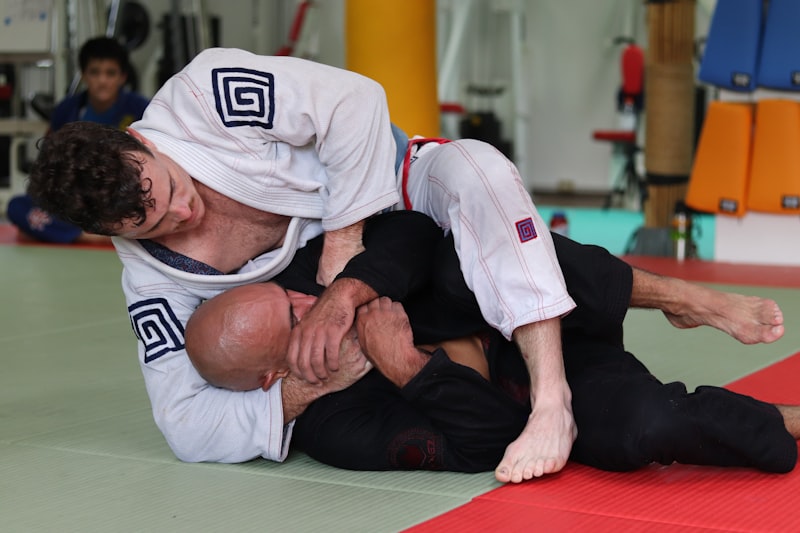
As you get better with the basics, you will notice that being stuck in only one guard isn’t enough. High-level grapplers connect their guard systems and switch between them as needed. Learning these transitions is, therefore, a vital skill for growth.
Moving from Closed to Open Guard: If you feel your closed guard beginning to open, do not panic. Shift your hips out, place your feet on your partner’s hips or thighs, and create an open guard before they can pass. Grips also matter. Try for a collar-and-sleeve grip combination or use spider grips to keep control while transitioning.
Switching from Open Guard to Half Guard: Sometimes, if you lose your hooks or your partner manages to pin one of your legs, transitioning to half guard is your best move. Trap their ankle or leg, turn onto your side, and start building your half guard frames. This keeps you safe and gives you new sweep options.
Combining Attacks for Chain Sweeps: Many successful sweeps come from combining them. For example, start with a scissor sweep. If your partner posts a hand, switch to a triangle or an armbar setup. This method is known as chaining attacks. It keeps your opponent guessing and improves your success rate.
According to modern competition data in 2026, more than 65% of successful guard players use multiple guard systems in a single match. In fact, top coaches say that being flexible with your guards will make your bottom game more “bulletproof.”
Drill Idea: Start in closed guard. Try for a scissor sweep. If blocked, transition to open guard, use the lasso or De La Riva, and go for a tripod or sickle sweep. If your partner steps out, switch to half guard and attempt the Old School sweep. Practice chaining these movements until you move smoothly between them.
Conclusion
Guard systems fundamentals for beginners can be the single most important skill for surviving and winning from the bottom. By understanding closed, open, and half guard, you create a foundation for control, defense, and offence. Sweeps, off-balancing, and transitions connect your guard game and protect you from passing threats.
If you are just starting, focus on learning the core positions. Drill basic sweeps and guard recoveries. Test what guard feels best for your body and always train chaining between systems. With time, patience, and practice, you will use the guard as both a shield and a weapon.
For more technical illustrations and in-depth tutorials, explore resources like BJJ Fanatics or watch instructional videos from trusted coaches. Keep training smart and remember: your guard is your home base, so build it strong from day one.