
Learning how to react in self-defense situations is a skill that can save your life. In 2026, understanding these skills is more important than ever because personal safety concerns continue to rise. Brazilian Jiu-Jitsu (BJJ) offers practical, proven techniques for handling common physical threats. This article will show you how to use BJJ concepts to stay safe when faced with grabs, strikes, or dangerous street situations. Saiba mais sobre Self-defense mindset differences between.
However, self-defense is about much more than just fighting. It starts with awareness, understanding of your surroundings, and making decisions with your safety as the top priority. In this guide, you will learn hands-on approaches, see real-life examples, and get the facts you need to react effectively when danger appears.
Essential Principles: How to React in Self-Defense Situations
Knowing how to react in self-defense situations is not about seeking conflict. Instead, it focuses on survival, escape, and minimizing harm. Brazilian Jiu-Jitsu (BJJ) is ideal for real-life self-defense because it uses leverage and body mechanics. This helps even smaller people defend themselves against larger attackers. Veja tambem: Self-Defense Techniques for Common Street Encounters: Expert Guide.
Situational Awareness The first rule is to stay aware of your environment. Criminals often look for targets who seem distracted, alone, or unaware. Studies show that attackers choose victims based on how alert they appear. By keeping your head up, making eye contact, and noticing odd behavior, you reduce your chances of being targeted. Veja tambem: Effective Self-Defense Strategies for Urban Environments: Your 2026 Safety Guide.
Verbal De-Escalation and Boundary Setting While many picture self-defense as physical, the best result is to prevent violence altogether. Clear, assertive language can often defuse a threat before it grows. For example, if someone invades your personal space, you can put your hands up (palms out) and say “Stay back” firmly. This posture signals you are alert and not an easy victim. Veja tambem: How to Use Body Language in Self-Defense Situations: Practical Tactics.
Physical Readiness and Positioning If a situation seems dangerous, position your body in a way that allows both movement and defense. Stand with feet shoulder-width apart, one foot slightly back. Bend your knees a bit. Keep your hands up at chest level. This stance, sometimes called the “fence,” allows you to protect your head and react quickly if a grab or punch comes your way.
Choosing Escape Over Engagement BJJ teaches that escape is always the first priority. Engaging physically with an attacker is risky. If it’s possible, run to safety and call for help right away. The U.S. Department of Justice strongly encourages escape as the safest option whenever possible.
Summary These principles—awareness, de-escalation, ready stance, and escape—are the foundation for reacting to real-life threats. Every physical self-defense move builds on these basics.
Real-Life Example
For instance, imagine you are leaving a store late at night and notice someone following you. You cross the street, look back, and speak loudly: “I’m calling for help!” This sends a message to the possible attacker that you are aware and willing to act. In most cases, this prevents the threat from going any further.
Defending Against Common Grabs: BJJ Techniques in Action
Physical self-defense often starts with an attacker grabbing your wrist, shirt, or shoulder. BJJ trains you to escape these grips with technique rather than strength. This section covers detailed steps to free yourself from the most common grabs.
Wrist Grabs
A wrist grab is one of the most basic attack types. However, it is also one of the easiest to break using BJJ principles. First, do not panic. Most people respond by pulling back with force. Instead, rotate your wrist toward the attacker’s thumb (the weakest part of their grip). Step back or to the side at the same time. In most cases, this action breaks the grip without much effort.
Shirt or Lapel Grabs
If someone grabs your shirt, bring your hands up to cover your face. This shields you from possible strikes. Use both hands to push the attacker’s grabbing hand down and away from your body. Move back as you do this. Next, use your closest forearm to wedge between the attacker and yourself, creating space to escape.
Bear Hugs from the Front
When grabbed in a bear hug from the front, drop your hips and lower your weight. This makes it hard for the attacker to lift you. In addition, use your elbows to push outward against the attacker’s arms. Once you have space, slip your hips out to one side and slide your body free.
Bear Hugs from Behind
When grabbed from behind, tuck your chin to protect your neck. Lower your center of gravity and move your hips forward, creating space between your back and the attacker. Next, step to one side. This weakens their hold, so you can turn around and escape.
Why These Work
These techniques work because BJJ focuses on leverage. You use body weight, position, and angles to defeat strength. Even a smaller or older person can use these moves with practice.
Statistics on Effectiveness
A study by the National Institute of Justice found that people trained in escape moves are less likely to suffer injury in assaults. In fact, the majority of street attacks start with a grab. Therefore, learning these basics can make a big difference.
Defensive Strategies Against Strikes: Protecting Yourself on the Street

While grabs are common, punches and kicks also happen in street confrontations. Brazilian Jiu-Jitsu usually trains for ground fighting, but its core concepts help in all areas of self-defense. Here are several safe ways to manage and counter strikes in real-world situations.
The Importance of Distance Management
Maintaining the right distance is key. Most attacks happen quickly and at close range. By keeping your hands up and watching an opponent’s shoulders and hips, you can spot early signs of aggression. If someone moves in too close, step back quickly. This creates space and gives you time to react.
The BJJ Clinch: Reducing Striking Power
If a punch or kick is coming and escape is not an option, close the distance and clinch. The clinch means wrapping your arms around the attacker’s body—usually under their armpits—with your head tucked close. While this might feel risky, it actually reduces the attacker’s ability to throw powerful punches or kicks. Use this point of contact to control their movement and set up ways to break away.
Protecting the Head: Cover and Frame
If you are caught off guard, cover your head by bringing your forearms up and close to your skull. Your elbows should point toward the attacker. This defensive frame, called the “shell” in BJJ and boxing, absorbs much of the force if a punch lands. Always move toward the side rather than straight back. In addition, keep your eyes open to spot chances to escape.
Going to the Ground: A Last Resort
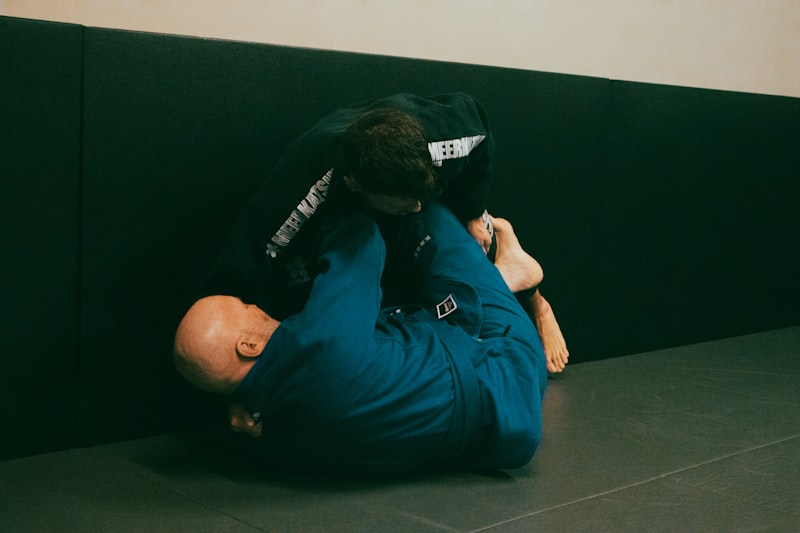
If you are knocked down or taken to the ground, stay calm. In BJJ, ground fighting is a core skill. Use your legs to keep space between you and the attacker. This is called “guard position.” If possible, kick or push the attacker away with your feet before standing up in a safe way. Avoid turning your back on the attacker while getting up.
Data and Research
Research in 2026 shows that controlling distance and practicing the clinch reduce injury in street fights. A report from Johns Hopkins Medicine emphasizes the value of hands-up positions and head movement to avoid injury.
BJJ Self-Defense for Street Scenarios: Safety First
Beyond specific grabs and strikes, self-defense means handling real-world street threats with a clear, effective approach. This section shows how to apply Brazilian Jiu-Jitsu for safety in risky settings like parking lots, sidewalks, or public spaces.
Awareness and Pre-Planning
Before trouble starts, notice exits, well-lit areas, and where people gather. In fact, most assaults happen close to home and in familiar surroundings. Avoid distractions such as phones or headphones. Walk with confidence and a purposeful stride.
Responding to Multiple Attackers
When more than one attacker is present, escape is even more important. Do not let attackers circle behind you. Keep moving and try to put a barrier (like a car or bench) between you and them. BJJ techniques for multiple attackers focus on creating space first. Only engage physically if there is no other option.
Use of Voice and Commands
Shout “Stay back!” or “Help!” to attract attention. Loud, firm commands signal you are not vulnerable. In many street incidents, attackers hesitate when a potential victim draws notice from bystanders.
Safe Escape Routes and Barriers
Plan your move toward well-lit areas or open shops. Busy streets, businesses, or groups of people make it much less likely for attackers to continue. In addition, if you are near cars, use them to block or separate yourself from the threat.
If Forced to the Ground in Public
If you are knocked down in a street scenario, BJJ’s “technical stand-up” allows you to rise with protection. Plant one hand and the opposite foot, keep your head up, and stand up while facing the threat. This keeps your hands and eyes ready for defense.
Legal and Ethical Considerations
In the United States, laws allow you to use only as much force as needed to stop a threat. BJJ’s techniques focus on control rather than hurting someone. This makes them safer in terms of the law and public safety.
Building Confidence: Drills and Mental Preparation
Practical BJJ-based self-defense requires practice, not just theory. In 2026, many gyms and community centers offer self-defense classes grounded in real scenarios. Here’s how you can build skill and confidence.
Solo Drills and At-Home Practice
Basic drills like “shrimps” (hip escapes), technical stand-ups, and grip breaks can all be done at home. Repeat them weekly for muscle memory. In fact, studies show that even 10 minutes of practice three times per week improves skill and response speed.
Partner Training for Realism
If possible, practice with a partner. Start slow, then add speed and surprise over time. Practice both sides—left and right—so your body learns to react from any angle. Simulate street clothes to feel how grabbing fabric differs from BJJ uniforms.
Scenario-Based Classes
Attend a self-defense seminar where instructors put you through simulated street scenarios. These classes often include stress drills, verbal role-playing, and multiple opponent drills. Therefore, you learn quickly what works and what doesn’t.
Mental Rehearsal and Visualization
Visualization is a proven tool. Picture yourself reacting correctly to common situations—escaping grabs, dodging strikes, and running to safety. Research shows this helps reduce fear and improve performance in stress.
The Value of Ongoing Learning
Even experienced BJJ practitioners keep learning. Laws change, new techniques get tested, and regular review deepens your skill. Follow trusted sources such as Gracie University, and take part in refresher classes if possible.
Conclusion
Knowing how to react in self-defense situations is a skill everyone should develop. Brazilian Jiu-Jitsu offers realistic, practical responses for common threats—grabs, strikes, and street violence. In summary, true self-defense starts with awareness, smart choices, and the resolve to escape when you can. Regular practice builds the confidence and speed needed to manage real stress.
For your safety and peace of mind, start with the basics today. Seek qualified instruction, commit to drilling regularly, and always put your well-being first. Stay alert, use proven techniques, and you will be prepared to protect yourself if the need arises.