
Learning a new sport can feel overwhelming, especially with all the jargon. This guide shares common BJJ terms explained for beginners, so you can step onto the mats with confidence.
Brazilian Jiu-Jitsu (BJJ) schools have their own words and customs. For white belts and new students, understanding these terms is critical. Your first months will be much easier when you know what your coach and classmates mean.
In this article, you will find clear definitions, real-world examples, and practical tips. Each section is built for beginners in their first BJJ classes. Let’s get started.
Common BJJ Terms Explained for Beginners: Must-Know Words for Your First Classes
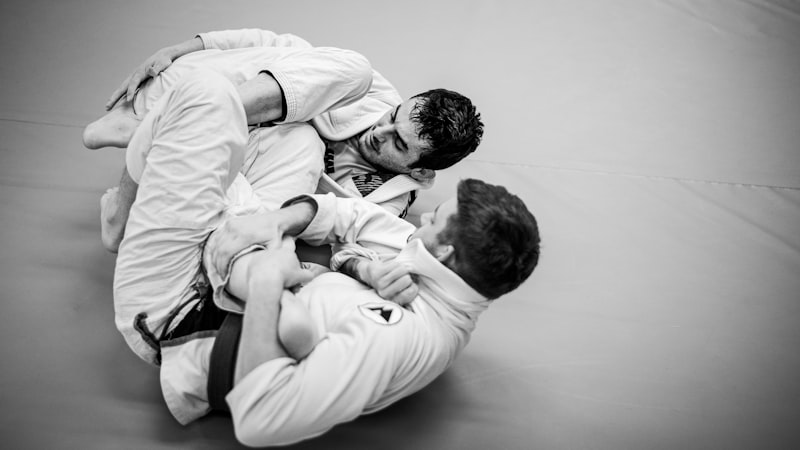
Starting in a new gym, you will hear many unique words. Coaches and advanced students use these BJJ terms daily. Understanding them helps you follow instructions, ask questions, and learn faster.
Gi and No-Gi are the first terms. The “gi” (pronounced ‘gee’), is the traditional uniform. It is similar to a judo or karate suit. No-gi means training without the gi. Instead, students wear shorts, spats, and a tight shirt (rash guard). Veja tambem: How to Survive Rolling as a BJJ Beginner: Practical Tips for White Belts.
Tap or tapping is essential for safety. If you are caught in a submission, tap your opponent or the mat three times. This signals them to stop. Never ignore a tap—this rule helps prevent injury.
Instructors use positions to name body placements on the ground. For example:
- Guard: One person on their back, using their legs to control or block their opponent.
- Mount: One person sits on the other’s torso, often seen as a dominant position.
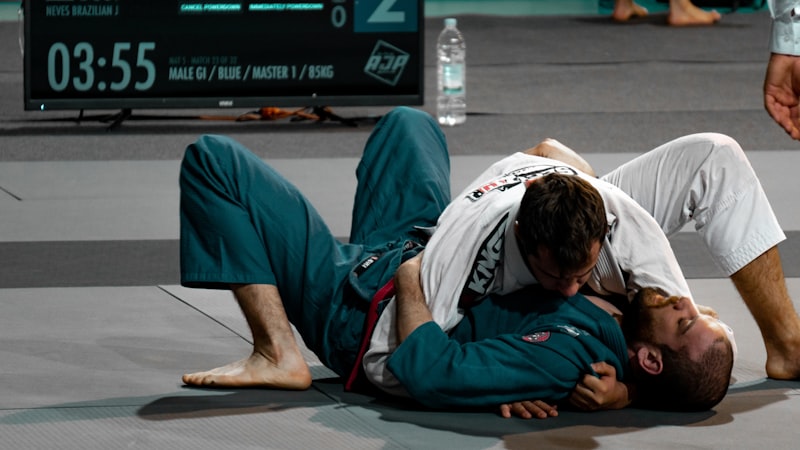
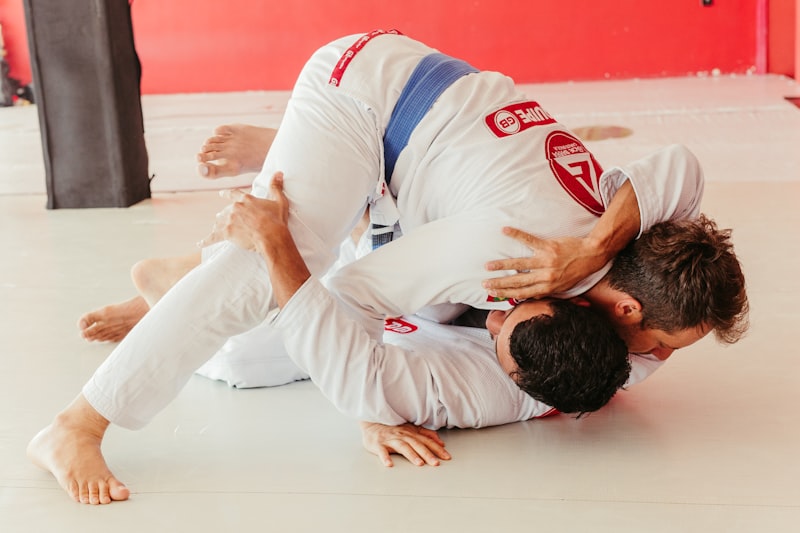
- Side Control: Top player holds the opponent down at a right angle.
- Armbar: You lock the opponent’s arm and use your hips to apply pressure to the elbow.
- Triangle choke: Your legs form a triangle shape around the opponent’s neck and arm, cutting off blood flow.
- Rear naked choke: This is applied from back control, using your arms to squeeze the neck gently until the opponent taps.
In addition, you should know the meaning of roll or rolling. This is sparring or practice fighting. It is friendly but realistic, always starting with a handshake or fist bump.
Other terms include submission (a technique to finish the round, like an armbar or choke), sweep (moving from bottom to top), and pass (getting past the opponent’s legs or guard). Learning these words helps you survive your first BJJ classes and shows respect for gym etiquette.
White Belt Etiquette: Key Phrases and What They Mean
BJJ is not just about moves—it has a special culture. White belts must understand etiquette terms to fit in. When the coach says “line up by belt,” students stand in rank order from highest to lowest. In most gyms, newcomers stand at the end.
You might hear “oss.” It is a term used for greeting, showing respect, or acknowledgment. Say “oss” when you bow before entering or leaving the mats. Some academies use it at the end of class or after instructions.
“Professor” means black belt instructor. Treat them with respect. Calling higher belts “coach” or “professor” is common, while “sir” or “ma’am” is used in some traditional gyms. When partners are switching for drills, “pair up!” means find someone new to train with.
Respect for the gym is shown with simple words: “thank you” after rolling, “excuse me” if you cross someone’s line of sight during class. These small language customs signal you understand BJJ’s community values.
Essential Positional Terms Every Beginner Should Know
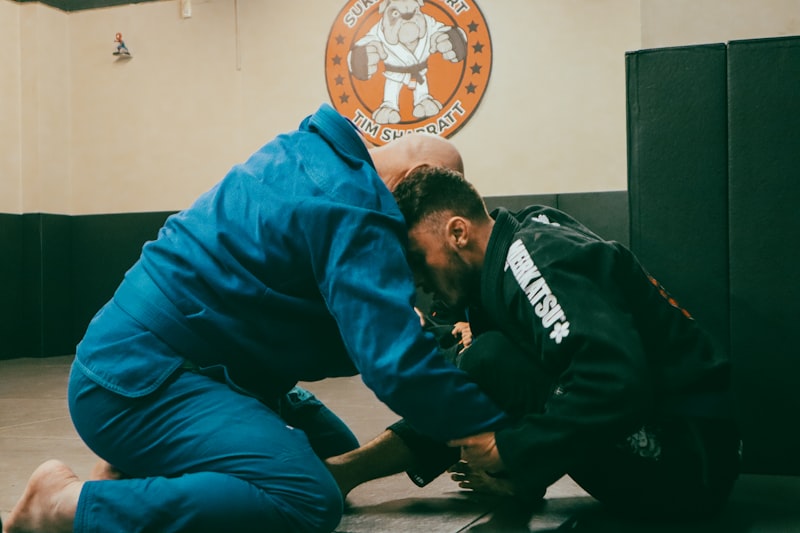
In your first weeks, lessons will focus on positions. BJJ uses clear names for different situations. These terms make up the foundation of your training.
Closed guard is the position where your legs wrap around your opponent’s waist from the bottom. It’s both defensive and attacking. You’ll spend lots of time learning how to escape and control this spot. On the other hand, open guard means your legs are not locked, allowing more movement and different attacks.
Half guard is when one of your opponent’s legs is trapped between your legs. Many white belts struggle here at first, but it is a key position for learning transitions.
The back control, sometimes called “taking the back,” means you are behind your opponent, controlling their upper body with hooks (your feet inside their thighs). It is the most dominant position in BJJ. Most submissions from the back are hard to escape.
In addition to these, you’ll hear about the turtle position. Here, a player kneels on all fours. This can be a defensive shell or a setup for attacks.
Each of these positions has its own tactics and strategies. As a result, knowing the right terms helps you understand coach instructions and ask for specific advice.
When the coach says, “Recover guard!” they mean bring your legs back between you and your partner. If you hear, “Establish side control,” they want you to move perpendicular and pin the other’s body. Simple instructions become clear once you know these basic words.
Fundamental Submission and Movement Terms in Beginner BJJ
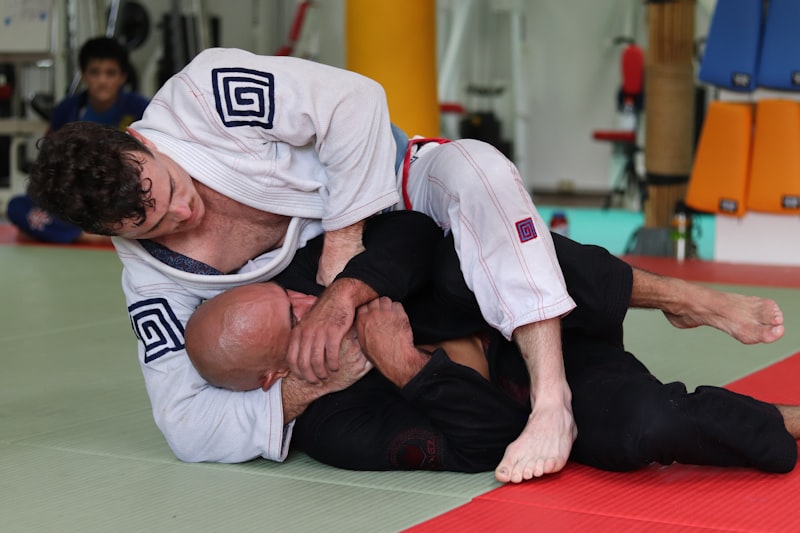
Submissions are moves designed to make someone tap. The first submissions most white belts face are the armbar, triangle choke, and rear naked choke. Each has its own name and relies on control plus precise body placement.
In addition, two essential movement words you will hear are shrimp and bridge. Shrimping is a hip-escaping movement. It creates space to recover guard or defend attacks. Bridging means raising your hips off the mat, often used to escape mount or side control.
Another word is base. This means your posture or stability while on top or defending. Coaches remind students to “keep your base strong” to avoid getting swept.
Finally, posting means using your hand, elbow, foot, or knee to support your body for balance. “Don’t post on the mat with your arm!” is common advice since this can make you vulnerable to attacks or injury.
By learning these basic terms, you will understand feedback during beginner classes and survive your first rolling sessions.
Safety, Rolling, and Class Structure: Terms for White Belt Survival
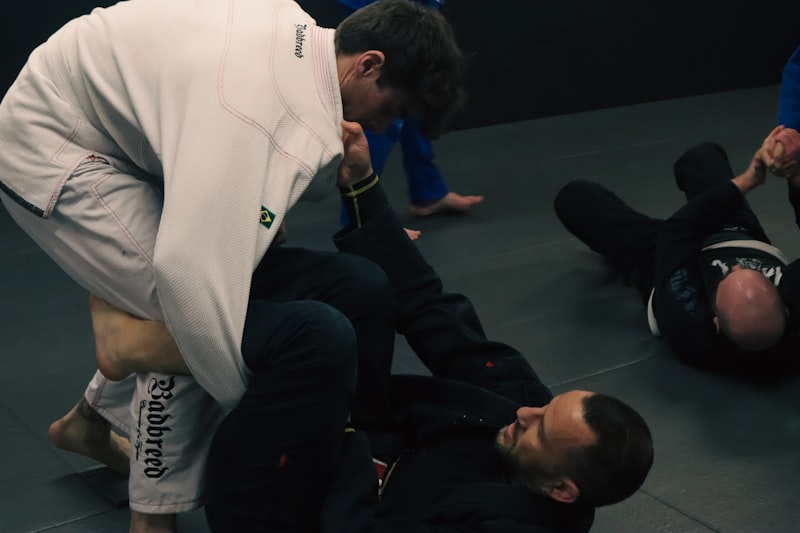
Your early days in BJJ are about building comfort and staying safe. That’s where understanding safety and class structure words matters.
Mat etiquette is often spoken, but much is understood through terms and actions. For example, “bow in” means show respect before stepping onto the mats. Instructors may say “fist bump” before sparring to signal friendly intent.
A “round” is a set time for live rolling or drills. White belts usually roll for four to six minutes per round. “Time!” means the round is over and you need to stop training. Always stop immediately—never continue after time is called.
You’ll often hear “flow roll.” This signals a light, playful sparring style, focusing on movement and technique, not winning.
Tap early, tap often is a classic safety motto. It means don’t wait until you are hurt to submit. Tap as soon as you’re stuck in a tight position or submission.
Some classes use positions of the day or technique of the day. This tells you what will be the focus during drilling. Knowing these terms turns confusion into confidence for white belts.
Finally, there’s “OSS” again at the end of class: the group may say it together after thanking the coach. It’s not just a word. It shows shared respect and commitment.
How to Practice and Remember Important BJJ Terms
Learning common BJJ words is easier when you practice them daily. First, listen carefully during class to how words are used in sentences. Many students create flashcards or keep a notebook with new terms and meanings.
You can also read excellent guides online, such as BJJ Fanatics’ blog. Watching instructional videos on YouTube helps you link movement to vocabulary. Hearing coaches explain techniques reinforces words with live examples.
Drilling moves with a partner is a practical way to remember terms. For instance, when practicing shrimping and bridging escapes, say the words out loud each time. Ask upper belts or your coach if you are unsure about a term. Most schools encourage beginners to speak up and clarify points of confusion.
In addition, many academies have posters or handouts of common BJJ vocabulary. Review these before and after class. Over time, the language becomes second nature, just like tying your belt.
Studies show that students who engage with material outside of class improve faster. According to BJJ Success, learning the terminology early boosts your ability to absorb technical details and etiquette.
Conclusion
BJJ can seem like “learning a new language,” especially for white belts. However, once you master these basic terms, everything becomes clearer.
In this guide, you found common BJJ terms explained for beginners. Each definition, example, and tip helps you feel supported from your first class onward. Practice these words in every lesson. Don’t be afraid to ask questions or check with upper belts if you are unsure.
Good luck in your training—every expert was once a beginner. Stay curious, respect the culture, and focus on learning one step at a time. For more beginner tips and white belt guides, keep following ismartfeed.com.