
A clear comparison of joint locks vs choke finishes offers insights into two dominant categories of submissions in grappling. Both methods play vital roles in Brazilian Jiu-Jitsu (BJJ), mixed martial arts (MMA), and other combat sports. However, athletes and coaches often debate the best technique for control, safety, and reliability.
Understanding these differences improves your ability to choose winning finishes from dominant positions and transitions. In this article, we break down mechanics, effectiveness, examples, and risk profiles for each approach. As a result, you will be better equipped to master finishing sequences in both training and competition.
The Fundamentals: What Sets Joint Locks and Choke Finishes Apart?
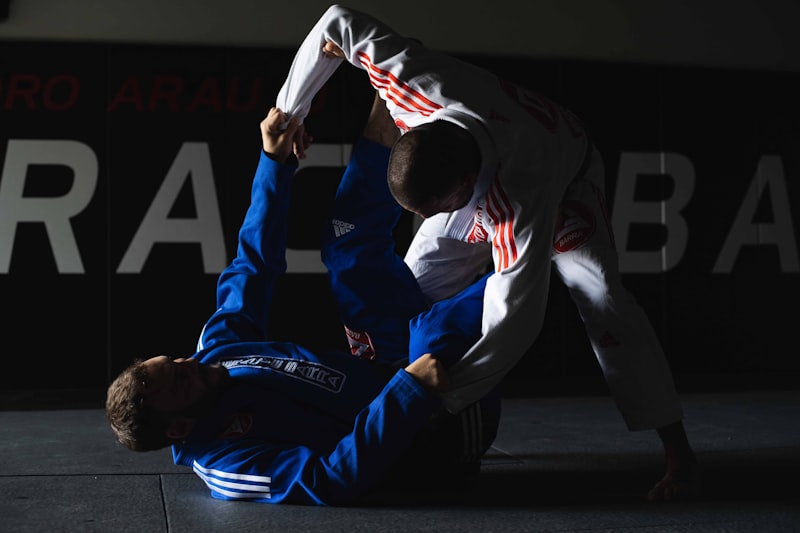
The comparison of joint locks vs choke finishes starts at the basic definition of each submission. Joint locks target the movement of a specific joint. The goal is to force hyperextension or rotation, which causes intense pain or risk of injury. This usually leads the defender to submit by tapping, both for safety and survival in sport settings.
Choke finishes, on the other hand, do not target the joints. Instead, they cut off the blood or airflow to the brain. In other words, chokes deny oxygen by compressing arteries (blood chokes) or trachea (air chokes) until the opponent taps or becomes unconscious. Veja tambem: Beginner Mistakes in Applying Submissions: Key Errors to Avoid.
For example, an armbar targets the elbow joint. A rear naked choke, however, applies pressure to both sides of the neck. Although both techniques achieve a submission, the physiological mechanisms and typical responses differ greatly. Veja tambem: Importance of Control Before Finishing Submissions in BJJ and MMA.
Therefore, knowing how each finish works is vital for effective grappling. Joint locks may rely more on precision and leverage, while chokes often use body positioning to maximize pressure. However, both compete for dominance in practical application across positions like mount, guard, back control, and transitions.
In fact, top coaches recommend mastering both joint locks and chokes for a well-rounded submission game. This is especially true for those interested in the art of finishing sequences from dominant positions, as emphasized by BJJ Fanatics.
Typical Examples in Modern Grappling
There are many joint locks used today. Common examples include:
- Armbar (hyperextends the elbow)
- Kimura (targets shoulder rotation)
- Straight ankle lock (compresses the foot and ankle)
- Heel hook (twists the knee)
- Rear naked choke (blood choke)
- Triangle choke (blood choke using the legs)
- Guillotine (can be blood or air choke)
- Ezekiel choke (using gi sleeves or forearms)
For chokes, popular options are:
Top-level grapplers in 2026 often specialize in a few high-percentage options in both categories. The balance between these skills shows up in competitions, where athletes adapt based on the situation.
Effectiveness by Position: When to Target Joints or Go for the Choke
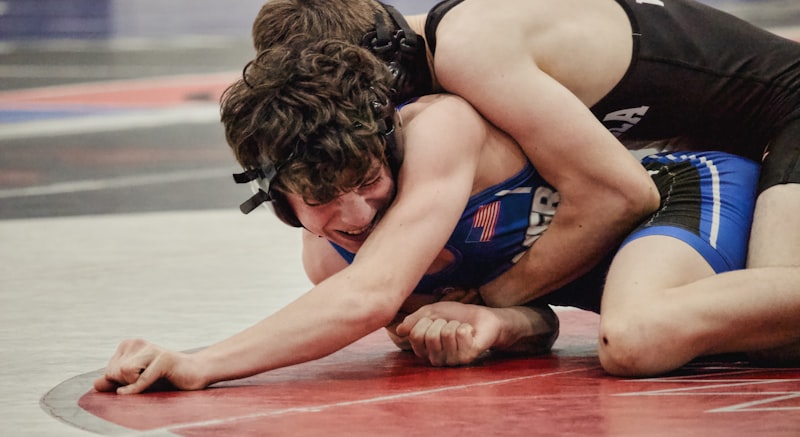
In grappling, submissions are most successful when applied from strong, dominant positions. The comparison of joint locks vs choke finishes becomes especially relevant as athletes transition, pass guard, or achieve mounts and back control.
For joint locks, the mount is often an ideal platform. From here, attacking armbars and Americanas works well because the top player has control and gravity. Side control is also effective for kimuras or straight armbars. In addition, the legs can be isolated for leg locks, especially from positions like ashi garami or saddle. These are popular in modern submission grappling and no-gi competitions.
Choke finishes, by contrast, favor positions where you have access to the neck and can keep upper body control. The back mount is widely considered the most dominant position for chokes. Here, the opponent’s arms are less able to defend, and you can quickly switch between collar chokes, rear naked, and bow and arrow chokes. Guard positions, especially closed or triangle setup, also offer excellent choking paths. For example, the triangle choke and guillotine are fast finishers when your opponent tries to pass the guard.
Because of this, coaches teach students to flow between joint locks and chokes as opportunities change. If an opponent defends an armbar by pulling the arm back, the attacker may use the opening to snatch a triangle choke. In fact, high-level competitors in 2026 commonly chain these attacks together. This constant threat of both makes defense harder and increases submission rates.
Modern BJJ tournaments show top finishers using 60-70% of their submissions from dominant positions, with data splits for armlocks and chokes mirrored in IBJJF results.
Risk vs Reward: Submission Safety, Control, and Tap Rates
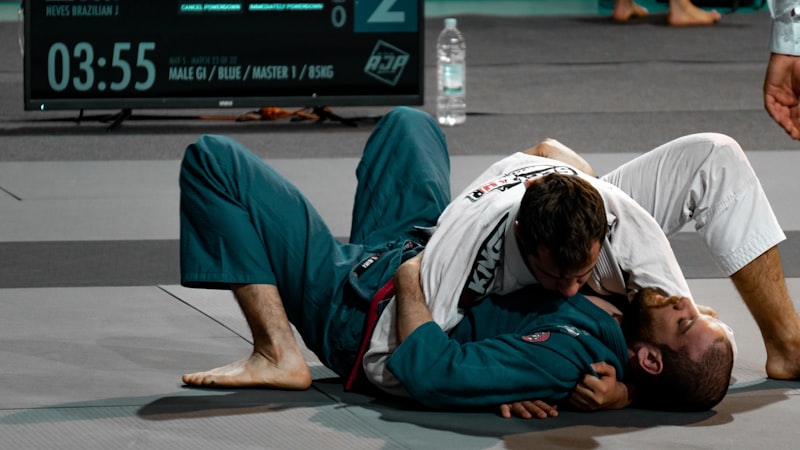
Choosing between a joint lock and a choke finish involves analyzing the risks, rewards, and likelihood of forcing a tap. Each type has advantages and drawbacks.
Joint locks have clear signals. The defender feels pain or tightness well before damage occurs. In most cases, athletes tap out before getting hurt. However, in fast scrambles or stubborn opponents, injuries—such as sprains, ligament tears, or even breaks—can happen if the submission is poorly controlled.
Leg locks, in particular, carry higher potential for injury due to the delicate structure of the knee and ankle. As a result, some gyms and tournaments limit heel hooks or certain foot locks, especially for beginners. These rules protect athletes but can reduce the frequency of joint lock attempts in some divisions.
Choke finishes work differently. Blood chokes compress the carotid arteries, cutting off blood flow to the brain. If held too long, the opponent will lose consciousness, sometimes within 6-10 seconds. Air chokes close the windpipe, causing pain and panic. The defender may “go out” before feeling the warning signs, making prompt recognition important for safety.
The advantage of chokes, as shown by competition data, is that they tend to have a high tap rate. Most people will submit before loss of consciousness. In addition, chokes can be effective even if the opponent is much larger—you cannot “tough out” the effects of a clean blood choke.
On the other hand, chokes need deep control. If the attacker loses positioning or grip, the submission may fail and allow escapes. This is especially true for attempts from less dominant positions.
In terms of control, joint locks give you a positional edge if the opponent escapes the lock. With chokes, loss of grip may leave you exposed if you overcommit. Therefore, competitors must balance risk and reward in both offense and defense.
Strategic Applications: Chaining Submissions and Finishing Sequences
For practitioners focused on submissions and finishes from dominant positions, the ability to chain joint locks and chokes is critical. The best competitors do not see these submissions in isolation. Instead, they create sequences where failed attacks transition smoothly into new threats.
For example, from mount, an attacker might isolate the opponent’s arm for an Americana. If the defender straightens the arm to escape, an armbar is available. If they turn aggressively to defend, the back becomes exposed. Once on the back, the attacker can threaten a rear naked choke. If the defender fights the hands, switching to a straight arm lock or even a triangle from the back is possible.
This “submission chain” approach increases the chances of success. Each failed defense opens up new attacks. As a result, the defender is often trapped, with their own reactions leading into deeper trouble. This strategy defines modern finishing sequences, especially in BJJ and submission-only tournaments.
Standing grappling in sports like judo or sambo shows similar dynamics. After a failed throw, the attacker often transitions to a straight armbar or triangle if the opponent posts with their arm.
Recent analysis of high-level matches in 2026—for example, finals at ADCC and IBJJF Worlds—shows that more than 50% of submissions come from chained attacks. Fighters who can seamlessly blend joint locks and chokes force their opponents into constant, exhausting defense.
For students at all levels, developing the awareness to switch between joint locks and chokes based on what the opponent gives is key. Drilling sequences, rather than isolated submissions, is recommended by coaches for rapid improvement and higher success rates in live rounds.
The Science: Biomechanics and Energy Use of Joint Locks and Chokes
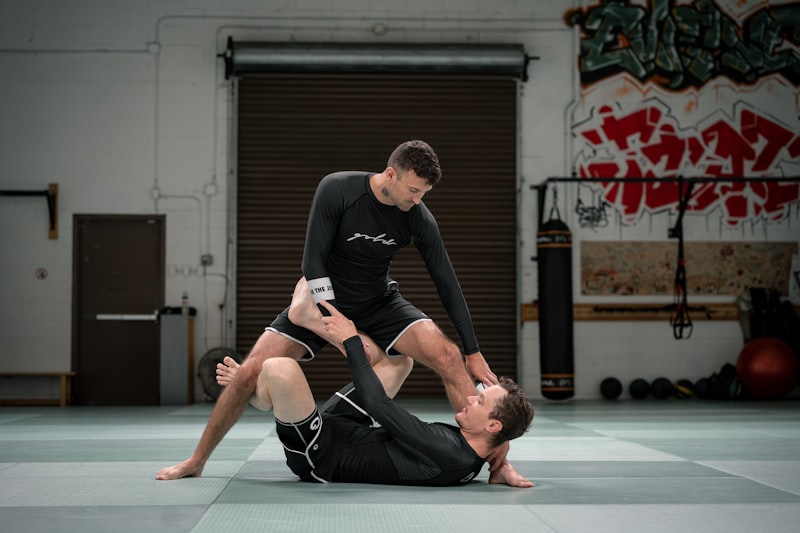
Breaking down the biomechanics for each finishing method reveals important differences in how they work. Understanding these can help grapplers improve their precision and timing.
Joint locks, like the armbar, use levers to force a joint beyond its natural range. For example, in an armbar, the attacker’s hips serve as the fulcrum. The defender’s wrist is pulled in a straight line, forcing the elbow to extend. By controlling both the shoulder and wrist, the attacker creates strong isolation, focusing force precisely on the target joint.
Because of this mechanical advantage, joint locks can work with less brute strength. Precision in grip and body position matters more than muscle. However, some larger or flexible opponents can resist, so correct angles are vital.
Choke finishes rely on compressing the sides of the neck (carotid arteries) or the windpipe. The efficiency of a choke depends on body positioning. For example, in a triangle choke, your legs form a triangle around the opponent’s neck and arm. Squeezing the knees and pulling the head tight reduces the artery space, quickly shutting down blood flow.
Blood chokes often need less pure muscle than air chokes. In fact, average-size grapplers can submit larger opponents if the technique is precise.
From an energy use perspective, chokes can sometimes require less effort to finish once deep—especially blood chokes where the opponent may “go out” regardless of size difference. On the other hand, joint locks may need sustained pressure if the defender is flexible or strong.
Finally, the biomechanics of each submission type influence how sequences are built. Joint locks can break grips to open chokes, and vice versa. Smart attackers use biomechanics to transition smoothly from one path to another.
Conclusion
The comparison of joint locks vs choke finishes reveals critical differences and strategic overlap for any serious grappler. Joint locks focus on hyperextending or twisting a limb, causing pain and risking injury. Choke finishes render opponents unconscious by cutting off blood flow or air.
Each submission type brings unique advantages depending on position, control, and athlete size. Joint locks excel when limbs are isolated. Choke finishes can equalize size advantages and often force taps quickly.
In fact, the best finishers in 2026 have mastered both categories. They chain joint locks and choke threats together into seamless sequences, maximizing control and submission rates from dominant positions and transitions.
Therefore, grapplers who develop awareness, chaining skills, and biomechanical precision will lead in both competition and self-defense. For more scientific background and detailed stats on submissions, see this educational guide on Jiu Jitsu University – Submission Modes.
Continue to focus on understanding and integrating both joint locks and choke finishes. This will make your submission arsenal complete and your attack game far more effective. If you train or coach, encourage regular practice of transitions between these two categories, helping your team raise both safety and submission success in every round.