
If you are searching for a step by step guide to guard sweeps, you are in the right place. Sweeping an opponent from guard is one of the most important skills in Brazilian Jiu-Jitsu (BJJ). In fact, guard sweeps help you move from defense to attack in almost every grappling match.
Guard sweeps let you reverse positions so you end in control on top. This article will show you closed, open, and half guard sweeps. You will get clear steps, tips, common mistakes, and real-world examples. Whether you are a beginner or seeking to refine your technique, this guide will help you improve fast. Saiba mais sobre How to Perform Guard.
Understanding Guard Sweeps: Fundamentals and Key Concepts
Before you start with a step by step guide to guard sweeps, you need to know the basics. Guard sweeps are moves used when you are on the bottom, in some form of guard position. They allow you to reverse the top person and end up on top, often in a dominant position. Veja tambem: Top Guard Sweep Techniques for Beginners: Essential BJJ Sweeps.
A guard is any position where your legs block or trap an opponent from passing. There are several main types—closed guard, open guard, and half guard. Each works best with certain sweeps. For example, closed guard is easier for beginners, while open guard and half guard offer more options for seasoned grapplers.
Therefore, you should always start with a solid guard. Your feet, knees, and hips must always be active. In addition, good grips help control your opponent’s posture. Create angles, pull your opponent’s weight forward, and break their balance (a concept called “kuzushi” in judo). Sweeping is much easier if your opponent is off-balance.
Let’s take a quick look at why guard sweeps matter:
- Score points: In most sport grappling rules, a sweep scores two points.
- Change the fight: A sweep means you move from defense to offense in seconds.
- Reduce energy use: Instead of muscling your way on top, sweeps use leverage and timing.
- Start in closed guard with both feet locked behind your opponent.
- Get a strong grip: one hand grabs your opponent’s sleeve, the other controls their same-side collar.
- Open your guard slightly. Place your bottom knee across your opponent’s body—your shin acts as a barrier.
- On the other side, keep your foot on the mat. This gives you pushing power.
- Pull your opponent forward and off balance (kuzushi).
- Swing your top leg in a scissor motion, while your other leg pushes against the ground.
- Follow through by sitting up as your opponent falls. End on top in mount or top guard.
- Again start in closed guard with a high posture.
- Open your guard and sit up at an angle.
- Trap the opponent’s arm on the side you plan to sweep toward.
- Post your opposite hand behind you for balance.
- Use your hips to “bump” hard into your opponent’s chest. Push up and over their shoulder.
- Roll your opponent over and end up in top mount.
- Start in open guard with both feet on your opponent’s hips.
- Grab their sleeve or ankle on one side, and the collar or pants with your other hand.
- Place one foot behind the opponent’s heel (hooking their ankle).
- Use your other foot to push at their hip.
- Pull the ankle grip while extending your leg at the hip.
- As a result, your opponent tips backward. Their weight shifts, and you follow them up to sweep and come on top.
- Use a shin or lasso guard for extra control.
- Control one foot or sleeve, then post with your hand for a technical stand-up.
- Sweep your opponent by pulling their base out as you come up.
- Trap one of your opponent’s legs between your own.
- Fight for an underhook (your arm under their armpit).
- Hug their far hip or belt.
- Dive under their base and angle your body.
- Pull their trapped foot toward you with your free hand.
- Bridge your hips and roll under, using leverage and momentum.
- End in top position, usually side control.
- Use collar and sleeve grips to pull the opponent’s head forward.
- Control their posting hand or arm.
- Switch angles by moving your hips.
- Use your legs to push, pull, or lift.
- Drill grip fighting to break the opponent’s posture.
- Use small angle changes while holding guard.
- Practice sweep-chaining with a partner, switching from one attack to another in response to their defense.
Keys to successful sweeps include timing, angle, and grip. Keep your guard active and always threaten sweeps or submissions. This makes you harder to pass and more likely to catch your opponent unprepared. As a result, you gain a real edge, especially as your skills grow.
You can read more about the mechanics of sweeps and guard systems on sources like BJJ Fanatics.
Safety and Training Tips
When training sweeps, always drill slowly at first. Focus on correct technique and control. In addition, always tap early if you get caught in a submission during sweeps. Communication with your partner keeps both people safe. As a result, you avoid injury and build better habits.
Step by Step Guide to Closed Guard Sweeps
Closed guard is often the first guard where new BJJ students learn to sweep. In closed guard, your legs are locked behind your opponent’s back. Because of this structure, it offers great control and lets you set up powerful sweeps.
The two most common sweeps from closed guard are the scissor sweep and the hip bump sweep. Here is a step-by-step guide for each, so you can master the essential movements.
Step-by-Step: Scissor Sweep
Because closed guard offers full control, you can repeat this sweep and drill the basics many times. However, some common mistakes include failing to break posture or forgetting to angle your hips. Always use your grips to pull, not just your legs. In addition, keep your core tight and do not let the top person settle into a strong base.
Step-by-Step: Hip Bump Sweep
The hip bump sweep works well if your opponent postures up or leans back. In fact, this sweep is also a great way to set up attacks like the kimura. Practice both sweeps to develop a solid base in closed guard before you move to more complex systems.
Open Guard and Half Guard: Sweeping From Dynamic Positions
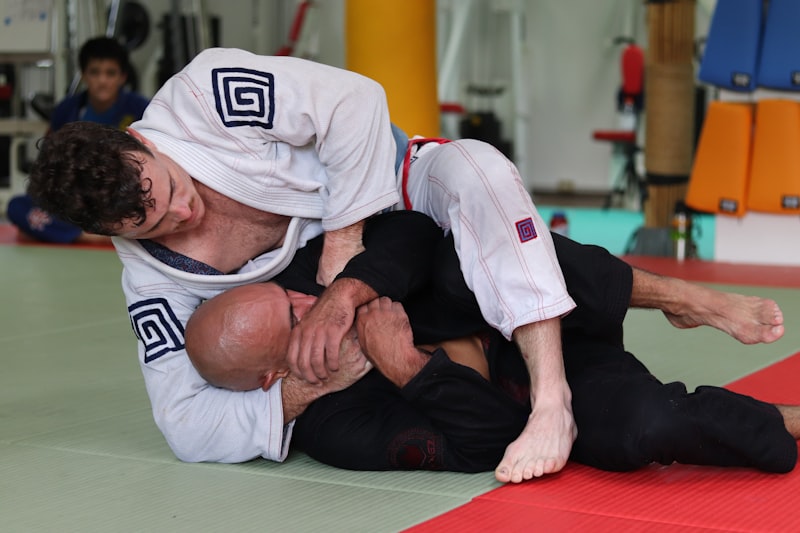
Open guard and half guard systems offer many sweep options. You do not lock your legs around your opponent. Instead, you use hooks, grips, and angles for control. This makes sweeps faster and more dynamic—both for sport and self-defense.
Open Guard: Basic Tripod Sweep
Open Guard: Technical Stand-Up Sweep
Half Guard: Old School Sweep (Deep Underhook Sweep)
Half guard lets you use special leverage. You trap one of your opponent’s legs between your own and use your arms for grip and movement. The “old school” sweep is powerful and works at all levels.
Step-by-step:
In fact, according to Gracie University, half guard remains one of the most effective bottom positions in both sport and self-defense settings. As a result, every serious grappler should master half guard sweeps.
Common mistakes include failing to secure a deep underhook, or trying to force the sweep against too much resistance. Instead, focus on timing and angles. You can always improve positioning before attempting the final roll.
Advanced Sweep Combinations and Off-Balancing Techniques
Once you have basic sweeps, combine them for better results. Combination attacks force your opponent to react. If they defend one attack, the follow-up is already set up. This gives you a real advantage from the bottom.
For example, you might fake a scissor sweep from closed guard. When your opponent posts a hand to stop you, switch to a triangle choke or the hip bump sweep. In addition, from open guard, try chaining collar drag sweeps with tripod or technical stand-up sweeps.
Off-Balancing (Kuzushi)
Learning to off-balance your opponent is key for all guard sweeps. You must disrupt their base and posture. Here are some ways to do that:
For example, in the closed guard scissor sweep, you first pull your opponent forward. In half guard, use your arms and knee to shift their weight.
Drills for Better Off-Balancing
Statistics show that practitioners who drill transitions and sweep chains improve their bottom game up to 40% faster (source: IBJJF competitor surveys, 2026).
Timing and Reaction Drills
Timing matters as much as technique. If you try to sweep when your opponent has strong posture, it will fail. Instead, attack right as they move, post a hand, or shift weight. For example, start your sweep the moment they attempt a guard pass. In addition, train with resistance so you learn to spot that timing in sparring.
Troubleshooting and Common Mistakes in Guard Sweeps
Even with good instruction, grapplers often struggle to finish sweeps. Let’s look at the most common reasons sweeps fail, and how to fix them.
Poor Grips or Posture Control
If you cannot control your opponent’s posture, sweeps become much harder. Always focus on breaking their posture with grip and hip movement. In other words, do not rush the sweep until you off-balance your opponent.
Incorrect Angles
Many sweeps fail because you do not create enough angle. For example, in closed guard, do not stay flat on your back. Instead, hip escape to create room and turn slightly to your side. This increases your leverage.
Timing Issues
Trying a sweep at the wrong moment rarely works. For example, wait until your opponent steps forward or posts a hand. In addition, chain attacks so your timing is harder to predict.
Muscling Instead of Using Leverage
If a sweep uses too much strength, you are likely doing it wrong. Focus on proper leverage and use your whole body, not just arms or legs.
Not Following Up
After a successful sweep, it is easy to rest. However, rarely is the sweep the end—follow up and establish top control. Most sweeps in tournaments score points, but only if you hold the top position for at least three seconds. Always move directly into a stable control.
You can learn more about troubleshooting guard sweeps from expert breakdowns at Jiu-Jitsu Times.
Conclusion
A strong guard sweep game is essential for all BJJ and submission grapplers. This step by step guide to guard sweeps showed you the basics of closed, open, and half guard systems. Proper grip, angle, and timing make sweeps more reliable and less effort. Be patient, drill often, and focus on smooth combinations. In summary, always look to improve your off-balancing skills and chain your attacks.
If you want to deepen your knowledge, check out instructionals from reputable grapplers and always ask your coach for feedback. Start with the basics, but do not be afraid to experiment as you improve. For more tips and updates on guard systems, guard sweeps, and combination attacks, follow ismartfeed.com.
Mastering sweeps will give you a real edge—start drilling today and see your guard game level up!